World Café 2026
In dialogue about the future of UniBE: World Café provides impulses for Fit for Future
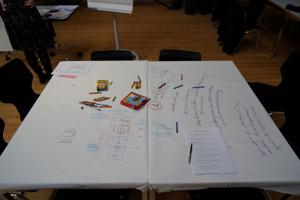
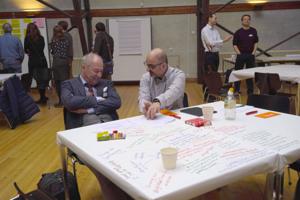
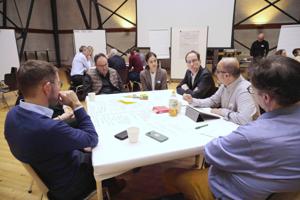
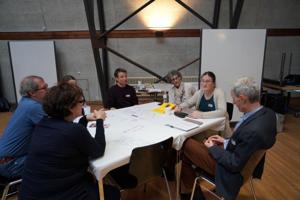
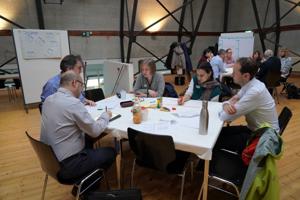
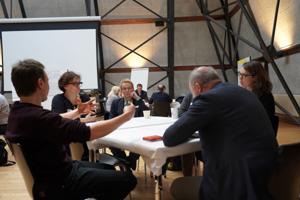
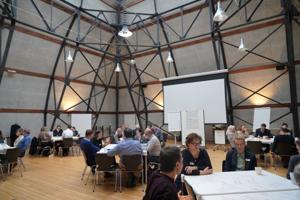
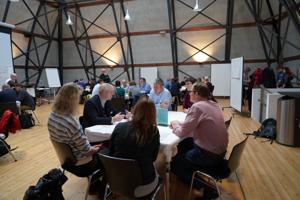
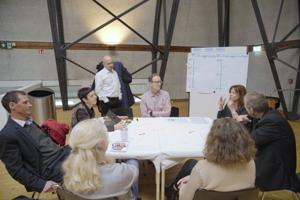
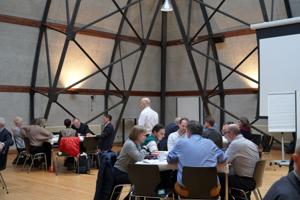
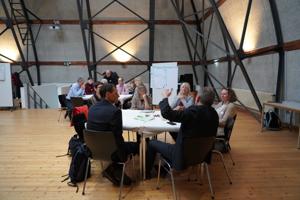
Around 40 representatives from faculties, central administration as well as delegates of the mid-level staff and the students' union gathered on 19th February in the Kuppelraum of the University of Bern for a World Café workshop as part of Fit for Future. The main focus lay on six strategic topics, namley digital transformation, leadership culture & change, UniBE life (project: cultural development), rethinking university structures, new professorship planning and new workplace concepts. The results will now be incorporated into the running Fit for Future projects and pursued further there.
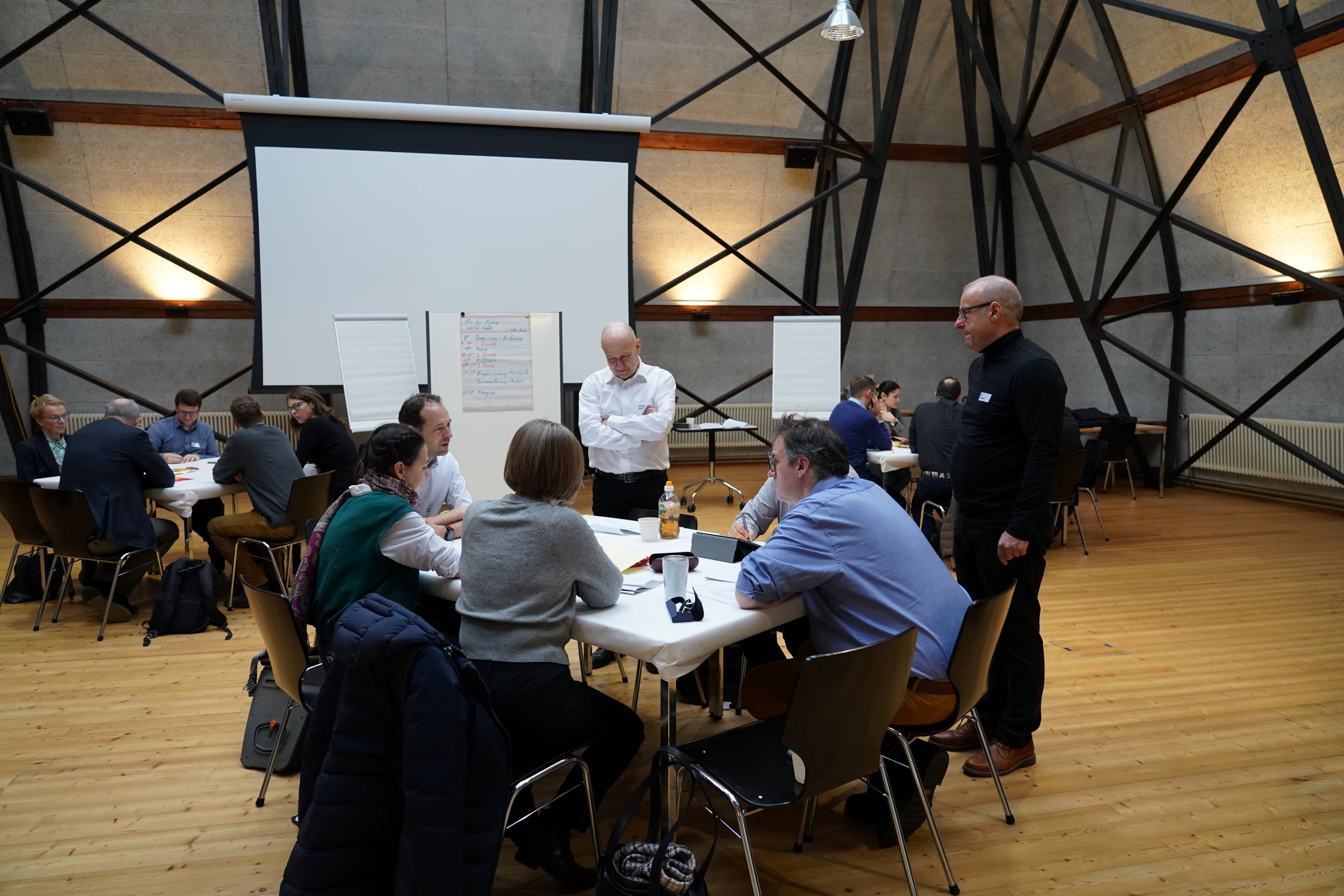
On 19th February, around 40 representatives from faculties, central administration, mid-level staff and the students' union met in the morning in the Kuppelraum of the University of Bern for another workshop as part of Fit for Future. In the World Café, participants discussed strategic topics that will play an important role in the future development of the University of Bern. The focus was on the action areas administrative interfaces, digital transformation, leadership culture & change, cultural development ("UniBE Leben") and new workplace concepts. The new professorship planning was also dopic of discussion. The goal of the exchange was to bring together different perspectives, share experiences and gain impulses for ongoing projects.
The discussions revealed how diverse the topics are and how they intertwine. With regard to professorship planning, decision-making processes, strategic priorities and the role of committees were discussed. The "Schnittstellenprojekt" focused on issues relating to administrative processes, information flows and mutual understanding between faculties and central administration. Digital transformation was understood as a cross-cutting issue that affects almost all areas and requires both structural and cultural changes. At the same time, leadership issues, role understanding and the importance of effective communication were at the centre of many discussions. Under the label "UniBE Life", topics such as identification with the University of Bern and cooperation across organisational units were discussed. In discussions on new workplace concepts, it was emphasised that this topic is not only about physical space, but also about leadership culture, working patterns, technologies and cultural aspects.
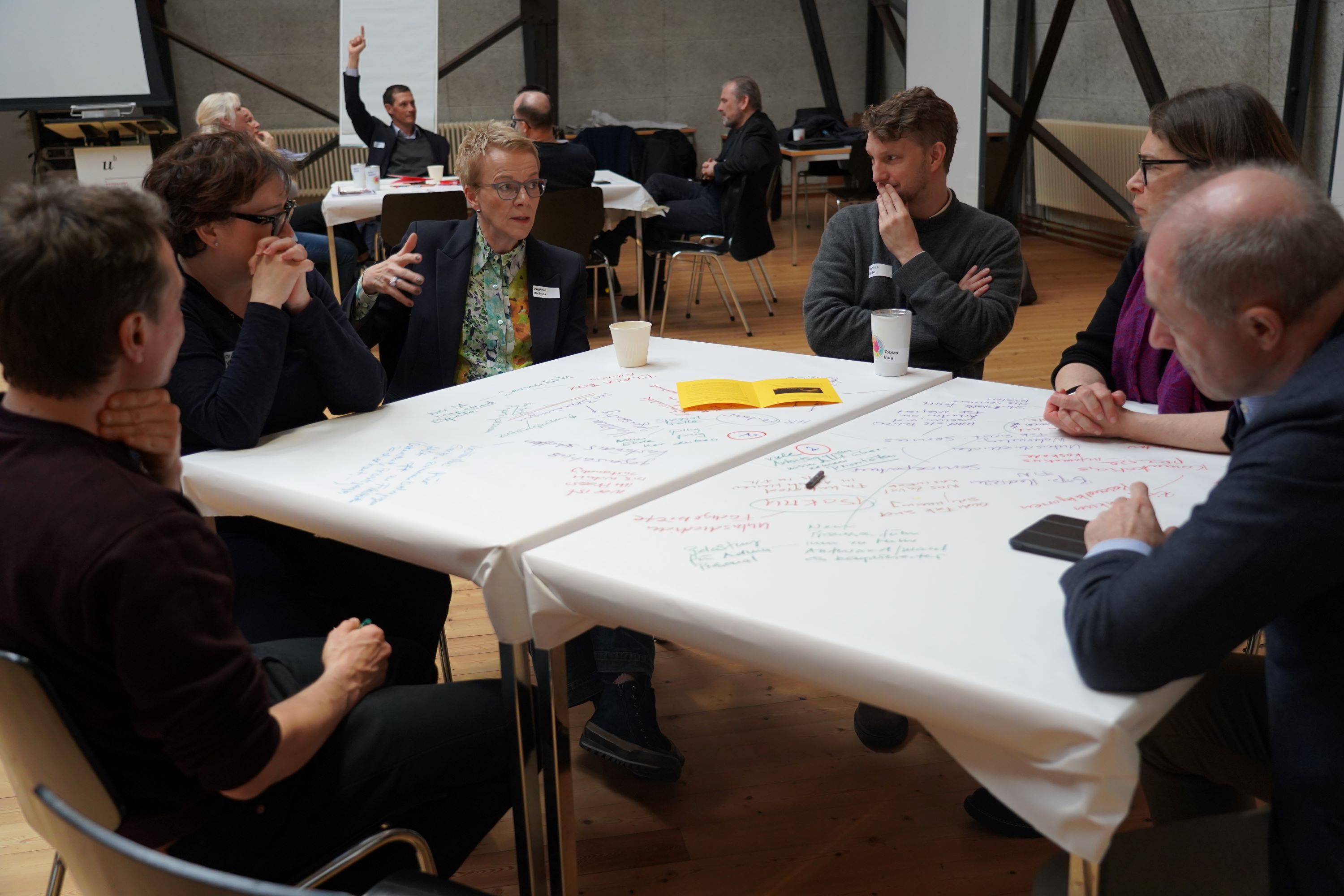
Several key points emerged from the discussions. For example, the professorship planning was pointed out as an essential strategic tool for the university. The wish for clearer decision-making processes and stronger empowerment for committees to take responsibility was expressed. At the same time, it was emphasised that quality assurance and personal responsibility must maintain a balance. More informal interaction between university administration and faculties was seen as an opportunity to reflect on strategic issues at an early stage.
Another key topic that was focused on was the collaboration at administrative interfaces. It was repeatedly mentioned that university structures were sometimes perceived as lacking transparency and that information was difficult to find. Thomas Myrach, Dean of the Faculty of Economics and Social Sciences, summed this up by saying: "It is often unclear who to contact in the faculties or central administration with which issues – yet transparency is a key prerequisite for trust and successful cooperation." Suggestions from the discussions ranged from improved knowledge management and clearer staff onboarding processes to more direct encounters in day-to-day work. The aim should be to make processes more comprehensive and to strengthen mutual understanding.
It is often unclear who to contact in the faculties or central administration with which issues – yet transparency is a key prerequisite for trust and successful cooperation.
- Thomas Myrach
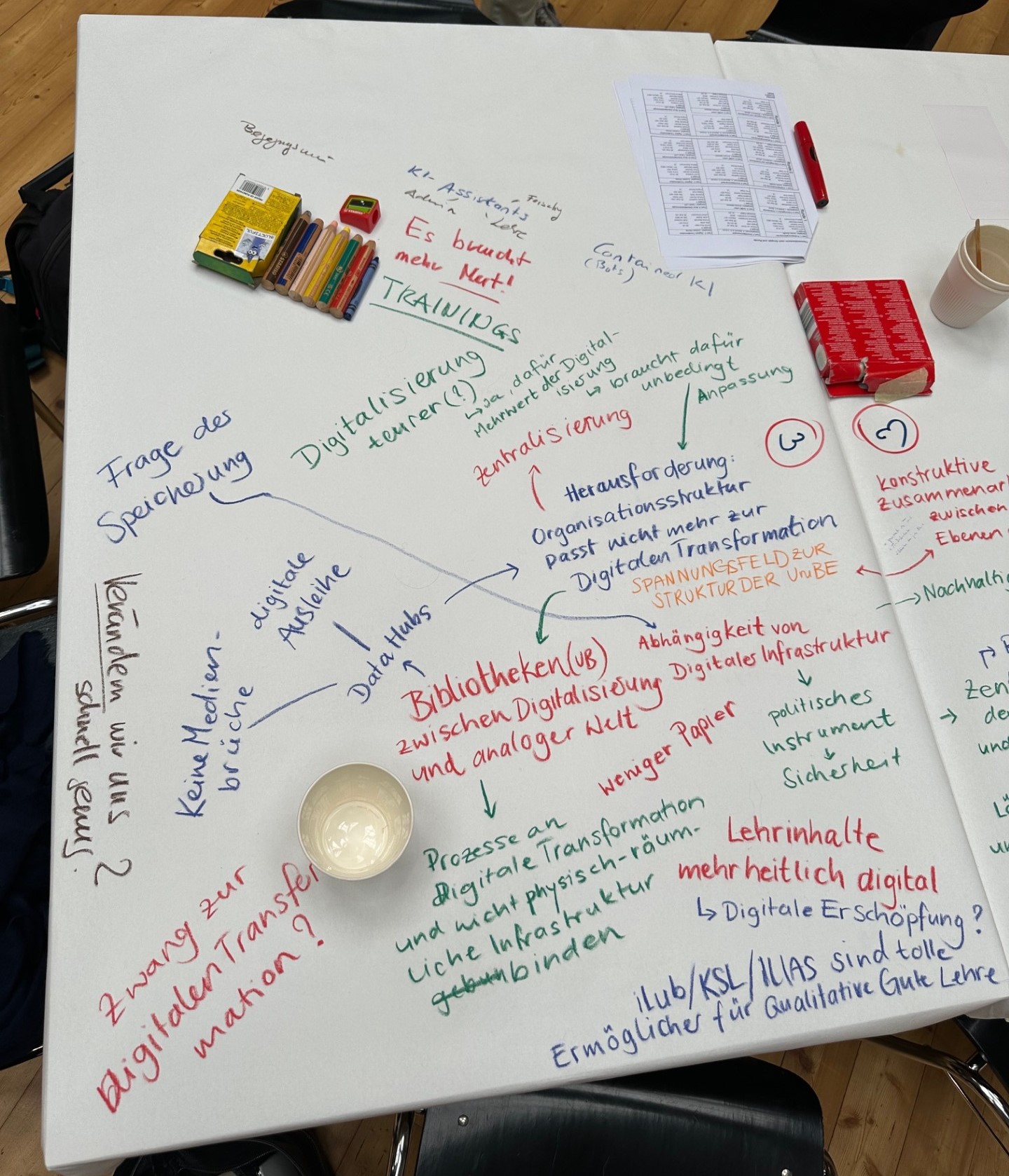
In the area of digital transformation, there was consensus that it must be seen primarily as an enabler for research and teaching. University-wide standards are considered necessary, but at the same time it was emphasised that top-down approaches can also be made participatory. Alongside technical issues, the focus was therefore on mindset, culture and prioritisation.
Leadership culture was highlighted as a key factor in change processes. Clear responsibilities, early communication and sufficient time for leadership tasks were cited as central prerequisites. At the same time, it became apparent that there are different logics of identification within the university – Rector Virginia Richter puts it this way: "While many faculty members identify strongly with their organisational unit, central administration staff more often take a broader view of the university as a whole."
Under the heading UniBE Leben, the importance of a shared understanding of terms for the future development of the university also became clear. Ainhoa Martinelli from the SUB emphasised that greater standardisation of terms and concepts could help to avoid misunderstandings and put discussions on a common foundation. This observation was reflected in several rounds of discussions, for example on topics such as centralisation, self-administration and cooperation across organisational units.
While many faculty members identify strongly with their organisational unit, central administration staff more often take a broader view of the university as a whole.
- Virginia Richter
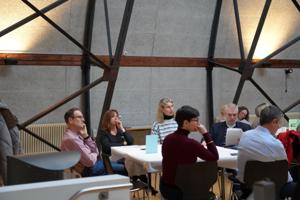
The discussions took place in a constructive and open atmosphere. Participants emphasised that the World Café format facilitated lively conversations while providing room for different perspectives. Not least, the discussions on new workplace concepts made it clear that changes go far beyond issues of space. Effective communication and the involvement of those directly affected were cited as key success factors.
The results of the workshop are now being incorporated into the ongoing Fit for Future projects. The project managers are implementing the findings discussed in their respective projects and pursuing them further there. This means that the exchange from the World Café will continue to be effective beyond the scope of the workshop and contribute to the strategic development of the University of Bern.
Impressions World Café 2026